AI Agents Aren't Replacing SaaS—They're Enhancing It
Katrin Wolf ·
Listen to this article~4 min
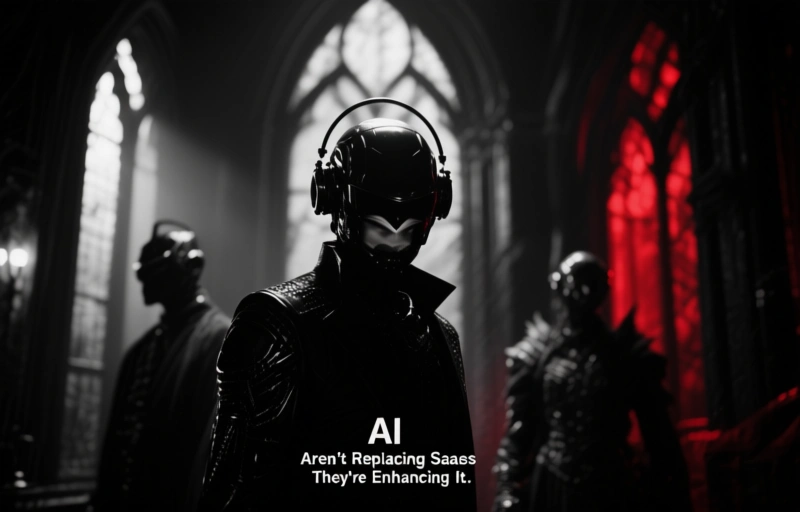
Forget the fear that AI will replace your SaaS tools. The real story is how AI agents are learning to use and enhance your existing software stack, automating workflows and boosting productivity from within.
You've probably heard the whispers—or maybe the shouts—that AI agents are coming for our jobs, our tools, our entire SaaS ecosystem. It's a compelling, slightly scary story. But what if the narrative is wrong? What if, instead of replacing the software we rely on, AI is learning to use it, just like we do?
That's the real shift happening right now. Think about it. We didn't throw away our calculators when we got computers. We just found faster, smarter ways to solve problems. AI agents are following a similar path. They're not here to eat the SaaS landscape; they're here to navigate it, automate it, and make it work harder for us.
### How AI Agents Actually Work With Your Tools
Imagine you have a new, incredibly eager intern. They're brilliant, but they don't know where the coffee machine is or how to file an expense report. An AI agent is kind of like that. It has immense potential, but it needs to be shown the ropes. It needs to learn the interfaces, the workflows, and the logic of your existing software—your CRM, your project management tool, your email platform.
That's the key insight. These agents are being trained to operate within the digital environments we've already built. They're logging into accounts, clicking buttons (virtually, of course), and pulling data to complete tasks. This isn't a hostile takeover. It's more like giving your existing software stack a supercharged autopilot.

### The Practical Benefits for SaaS Teams
So, what does this look like in your day-to-day? Let's get practical. If an AI agent can use your CRM, it can:
- Automatically update contact records after a call
- Log activities and notes without you lifting a finger
- Qualify leads based on set criteria and route them instantly
- Generate follow-up emails that pull from the latest interaction history
The magic isn't in building a whole new world of software. It's in making the world you already live in more efficient. Your team stays in the tools they know and love, but the tedious, repetitive parts of the job start to fade into the background.
> "The most powerful technology doesn't replace what we have; it amplifies what we can do with it."
That quote stuck with me. It perfectly captures this moment. We're not at a point of replacement. We're at a point of augmentation. The goal isn't to have AI do everything independently in a black box. The goal is to have it work alongside us, within our systems, to free up our time for the human work that matters—strategy, creativity, and genuine connection.
### Looking Ahead: A Collaborative Future
This changes how we should think about investing in new tools. Instead of asking, "Will this be replaced by AI?" we should be asking, "How well will this work *with* AI?" The SaaS platforms that thrive will be those with open APIs, clear automation pathways, and interfaces that both humans and AI agents can understand.
It's a more collaborative, and frankly, more exciting future. The pressure isn't on you to learn a dozen new AI-specific platforms. The opportunity is for your current stack to become smarter, faster, and more responsive. The AI isn't eating SaaS. It's sitting down at the table with it, ready to get to work.
So, take a breath. The tools you've invested in aren't becoming obsolete. They're about to get a major upgrade. Your job is to guide that process, to define the workflows, and to harness this new layer of intelligence. The partnership between human insight and AI execution is where the real value gets created.